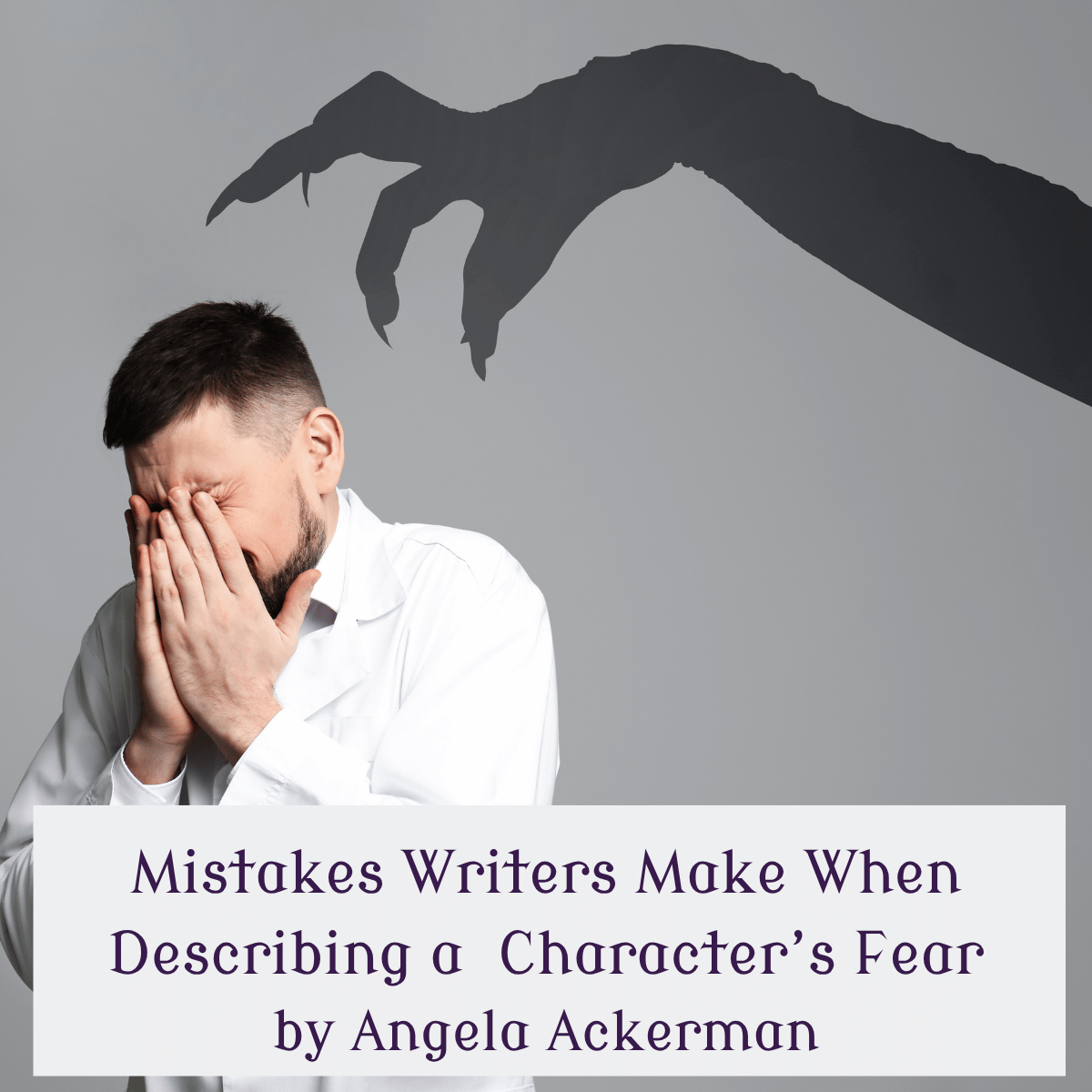
Fear is one of the most powerful emotions we can write about. When readers sense a character is experiencing it, they practically lean in, waiting to see what will happen next. But showing fear in a tangible way requires strong, descriptive choices that layer on discomfort and dread. It’s easy to make common mistakes when describing fear, so let’s look at what they are and how to avoid them.
Telling Instead of Showing
In real life—say, when you’re giving directions or are short on time—it’s often best to explain things as simply as possible. But writing fiction is different because you’re creating an experience for readers and inviting them into the character’s world.
“Telling” thwarts this effort because it’s a form of talking down to readers. By spelling things out, the author is unintentionally saying I’m not sure you’ll get the point if I write it subtly, so I’ll make it super simple.
Telling also fails to draw readers in because it doesn’t create an experience for them to share. It merely relays information. Instead of joining the character on their journey, readers are kept out of it, forced to hear about events at a distance.
It’s especially important to show a character’s emotions, and fear most of all. So don’t tell readers the character is afraid–use physical cues to show it. If you’re in the character’s point of view, share a thought or two that shows them struggling to process the triggering event. Add sensory details that engage the senses and make readers feel as though they’re in the scene. Let’s try an example:
A log shifted and crumbled in the fireplace, waking Julian from a doze. He blinked and closed the book in his lap. Past time for bed. He gathered breath to blow out the lamp when something thumped on the porch.
His head whipped around. It had sounded like something heavy, but nothing seemed amiss. The door was barred, anyway. After a long moment of listening, he let go of his breath. Maybe a branch had fallen or a barrel had tipped over in the wind.
Then a glaring light flashed, flooding the windows.
Blinded, Julian stumbled to his feet. The door shook violently, and the bar rattled. A shrill keening rose on the porch, and he caught a whiff of sulfur. Heart pounding, he jammed his fists over his ears and scrambled back to the hearth, lips moving in a frantic prayer that was cut off as the door blew off its hinges.
A trick for identifying places where you’ve told the character’s fear is to look for emotion being spelled out: afraid, terrified, panicked, fearful, etc. In most cases, these telling words can be replaced with stronger details that show the character’s emotional state.
Too Much Description
Julian’s example contains the right mix of sensory details, physical fear cues, and internal dialogue. Put together, they create a believable response. But it’s not always easy to strike the right balance. Too much of any of these can turn a strong description into a tedious one.
To keep readers engaged, be judicious with physical cues. Choose only the ones your character would notice in their current state. As their fear grows, they’ll continue to take in their surroundings but will register less of it while their focus is centered directly on the danger or threat.
Melodrama
Julian’s example shows his fear so clearly that readers can see what he’s feeling and maybe get a twinge of it themselves. This is possible because his emotions follow a natural progression. He begins at peace, becomes concerned at the unexpected sound outside, and surges to full-blown fear when the situation escalates.
Melodrama is created when we disregard the natural emotional progression and send characters immediately from a mild emotion to an intense one. This doesn’t ring true for readers because they recognize that what they’re reading isn’t a realistic depiction of how fear escalates or feels.
To avoid this trap, plot the character’s emotions to evolve naturally and sensibly. Be patient. Let the scene play out with enough escalations to move the character from one emotion to the next until they reach the level of fear you need.
Another cause of melodrama is overblown emotional reactions. A character who’s always fainting, hyperventilating, or screaming in terror grates on readers’ nerves because extreme responses like these aren’t the norm. To prevent these problems, map out your character’s emotional baseline so you’re familiar with their emotional range and how they’re likely to react. This gives you a blueprint for writing realistic, reasonable responses in those harrowing moments.
Lack of Sensory Details
Sensory details elevate descriptions, creating a multi-faceted world readers can see, hear, feel, smell, and taste. They pull readers into the scene, so we always want to include them.
Many writers get tripped up here because they’re hyper-focused on maintaining a quick pace or relaying important information. But when we don’t engage the senses—when we provide only visual details and dialogue—readers can’t become fully immersed in the scene.
To see this in action, look back at Julian’s example and read it without any sensory details: no shifting logs, no fiercely rattling door or unearthly shrieking, no stink of sulfur. Without those, the scene is reduced to a one-dimensional picture that readers must view from a distance.
Protect those sensory details but write economically. Choose the ones that highlight important sounds, smells, and textures. With them, you’ll provide contextual clues and keep readers engaged and attuned to the character’s fear.
Repeated Fear Cues
We all struggle to some degree with conveying emotion well, so when we find fear cues that work, it’s easy to fall back on them. But if a character’s eyes are always going wide or their knees continually buckle, readers begin noticing the repetition and it pulls them out of the story. Vary your descriptions to give characters a wider range of reactions and avoid redundancy.
A similar problem arises when those cues transfer to other characters, and everyone is wide-eyed with knees on the verge of giving out. No two people are identical, so each person’s response to fear (and what triggers it) should be different. Study your character and get a feel for how they each react. Many authors find character bibles helpful for recording and tracking emotional range, personality traits, nervous tics, and other factors that influence their character’s reactions in moments of high emotion.
Fear is one of the most powerful emotions a writer can put on the page, but conveying it well requires balance. Showing fear through choices, behavior, perceptions, and sensory detail helps you write scenes that are immersive and realistic. Readers won’t just read about what’s triggering a character’s anxieties, they’ll feel that unease and dread themselves.
Want more ideas on how fear shapes character behavior and choices? The Fear Thesaurus: A Writer’s Guide to What Holds Characters Back explores 80+ deep fears, from betrayal and heartbreak to powerlessness and death, and shows you how to write them into the story so your character’s inner struggles are on full display.
 Angela Ackerman is a story coach, international speaker, and a firm believer that writers succeed best together. Her desire to make writing easier for others led to her book collaborations with Becca Puglisi, as well as the development of One Stop for Writers, a creativity portal with game-changing tools and resources that enable writers to craft powerful fiction.
Angela lives in Okotoks, Alberta, in the foothills of the Canadian Rockies. She has an embarrassingly large collection of garden gnomes and enjoys traveling & connecting with writers all over the world. The Fear Thesaurus releases April 15.
Excellent advice on showing fear and the example is great. (Although if I were Julian, I would've bolted the room sooner!) Melodrama is like teen angst and just as annoying.
Right? I think melodrama happens because, as writers, we get so into the scene we don't see how we're going too far. This is why critique partners are so important – they have the distance we lack. :)
Thanks for this practical breakdown of writing fear effectively! That Julian example really demonstrates the difference between flat description and immersive scene-building.
Thanks so much, Elizabeth! Always so lovely to get to hang out on your blog!
These are all very helpful pieces of advice! Thanks very much!
Glad you found this one helpful, Margot! Hope your writing is going great!
These are great tips. I really appreciate your example.
Thanks, Natalie! I love it when we can roll out a good creepy example, lol. :)
Good suggestions. I would caution that some people do go from calm to panicked in a single second. PTSD and anxiety can both cause this. I like the advice to use different signals for different characters, but you can go overboard with that too and it could overload the reader to track all the many ways people feel afraid etc.
Yes, you are absolutely right – this is also the case when phobias are triggered. As long as a writer is consistent (showing this happens when certain triggers are present, not just 'sometimes') and there are enough hints to help readers understand what's behind it, jumping quickly to panic is fine.
It's all about immersing the reader rather than just reading them a story.
Absolutely! :)